Closing the innovation loop
A closed-loop system connecting external intelligence to internal execution — so any designer or PM can go from signal to shipped idea without a playbook in their head.
Designers and PMs see fragments of innovation signal but share no process for turning any of it into shipped work. New models ship weekly, methodologies evolve, competitors move — and the people who need to act on it are the last to hear. Even when they do hear, there's no shared way to turn a signal into a testable idea anyone can run.
Challenge.
The intel exists. Newsletters, papers, internal experiments, customer signal — designers see fragments of it, but no two designers see the same fragments. And translating any of it into a prioritized, testable idea takes private playbooks the team carries in their heads.
The result: smart people doing parallel duplicate work, and most signals dying on someone's pinboard before they become anything.
Scout tells you what to build next. Studio tells you how to build it right.
Approach.
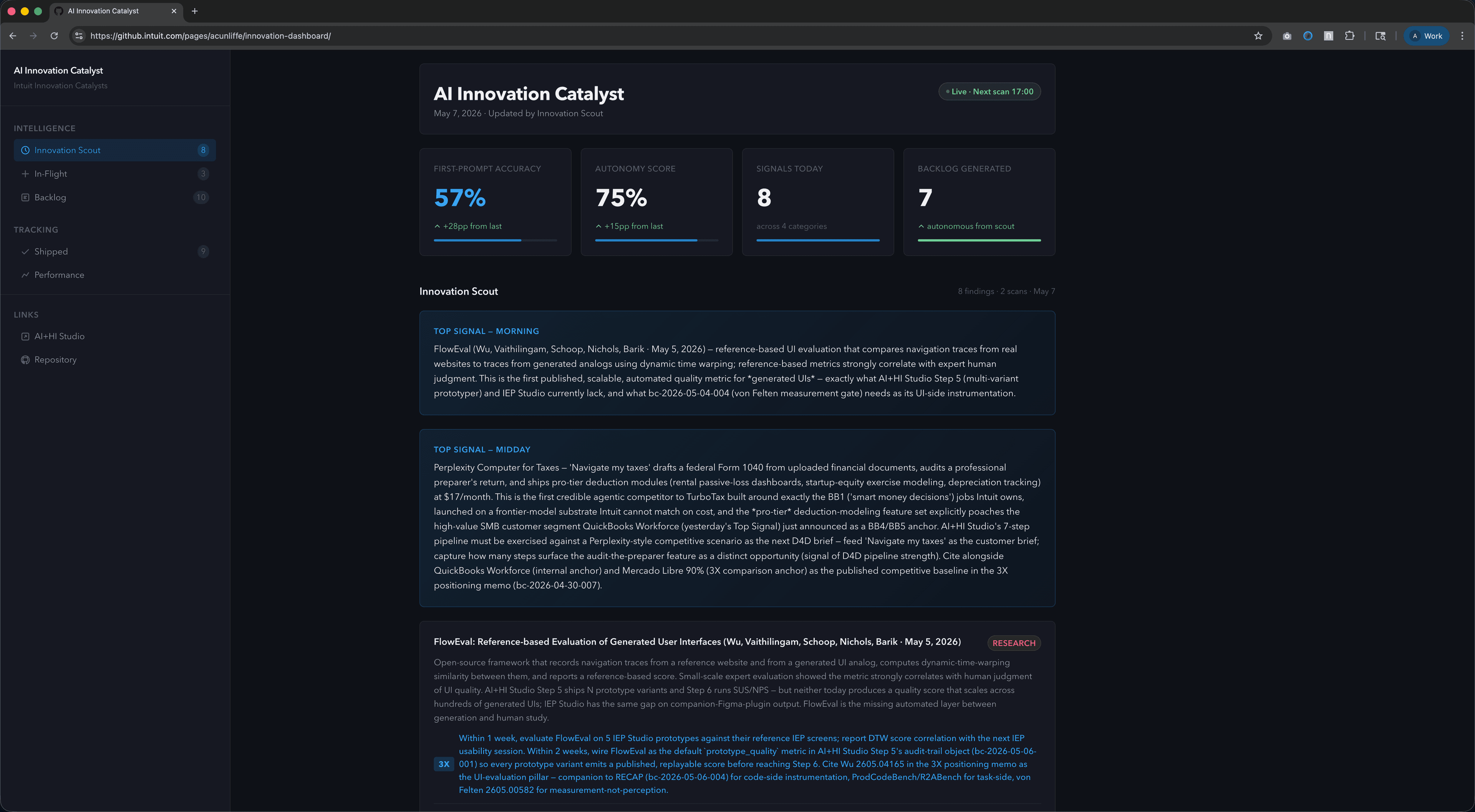
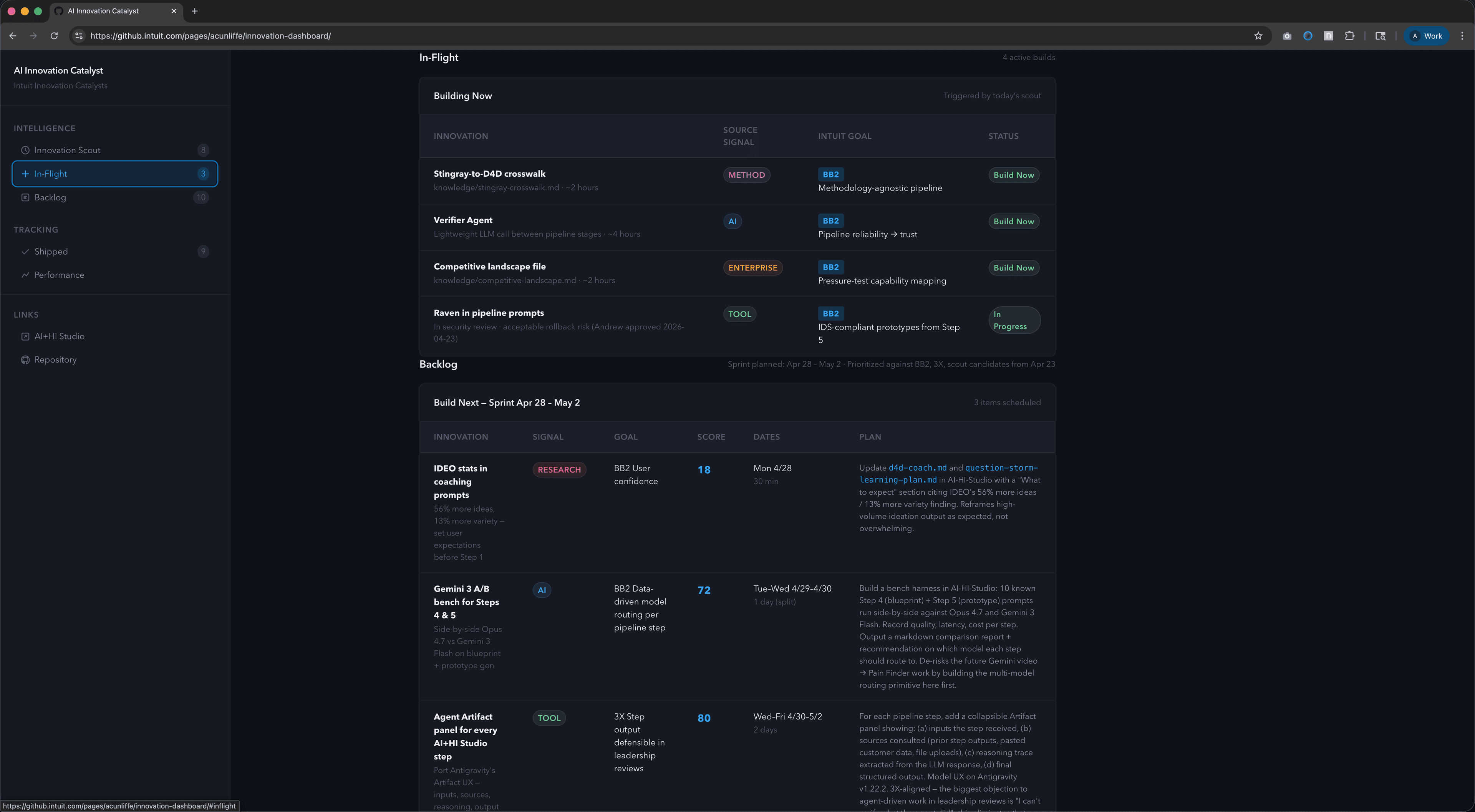
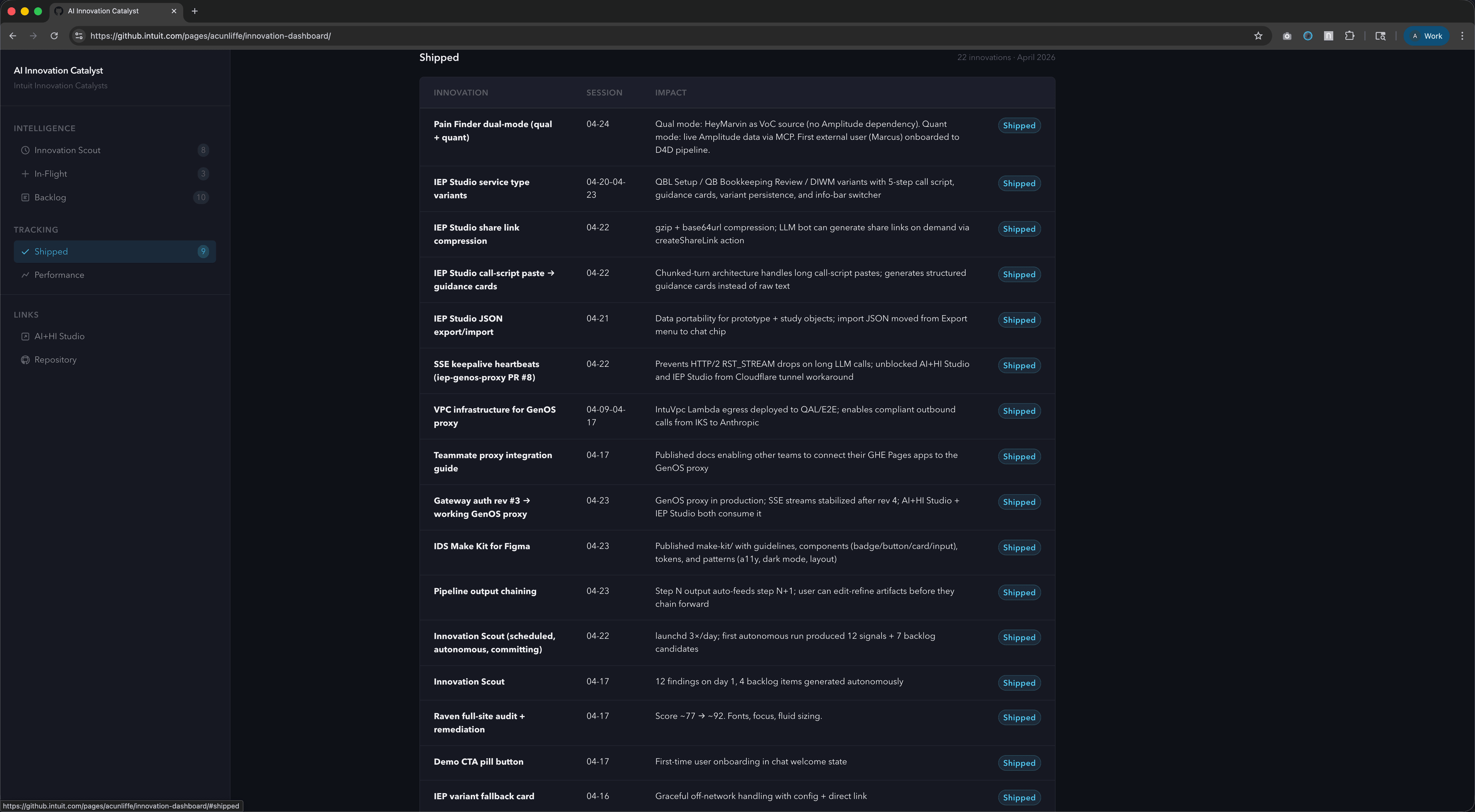
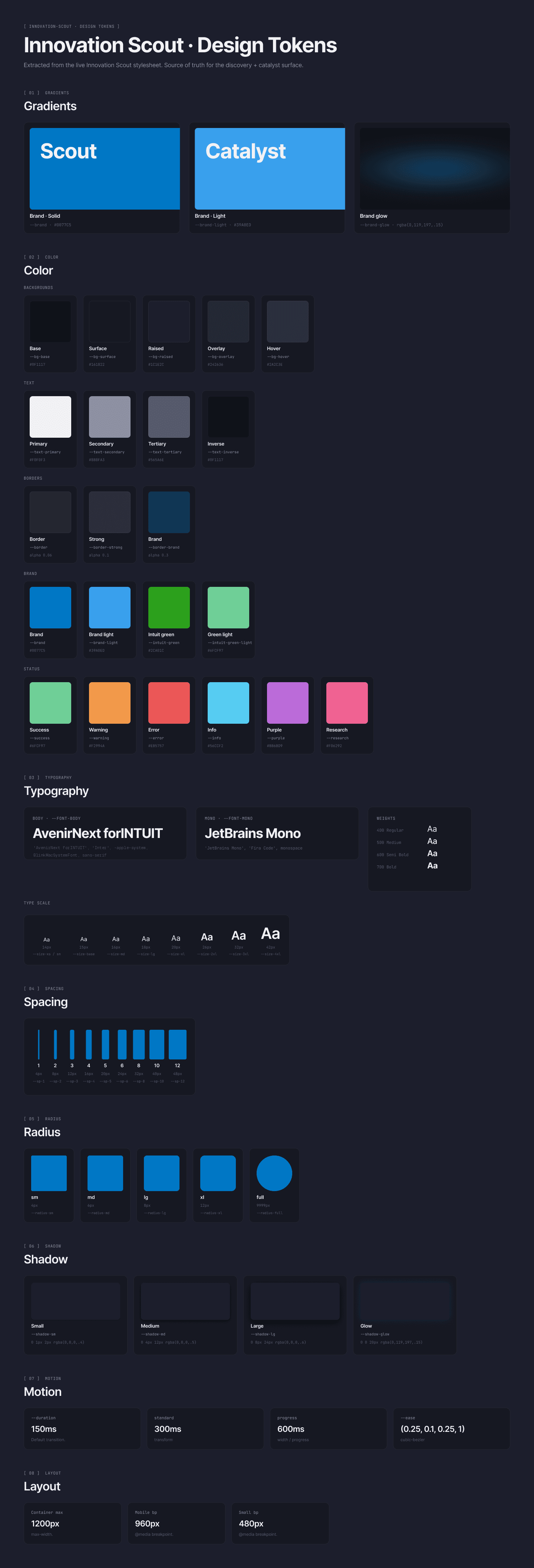
I built Innovation Scout as the external intelligence layer — a scheduled agent that runs three times daily, scans five signal categories, and writes structured briefings (What, Why it matters, Action). It scores each candidate against the org's actual strategic bets — set by the company, not inferred by the AI — and drops them onto a shared backlog. Any designer or PM can pick up a backlog item as a side project with the prioritization already done.
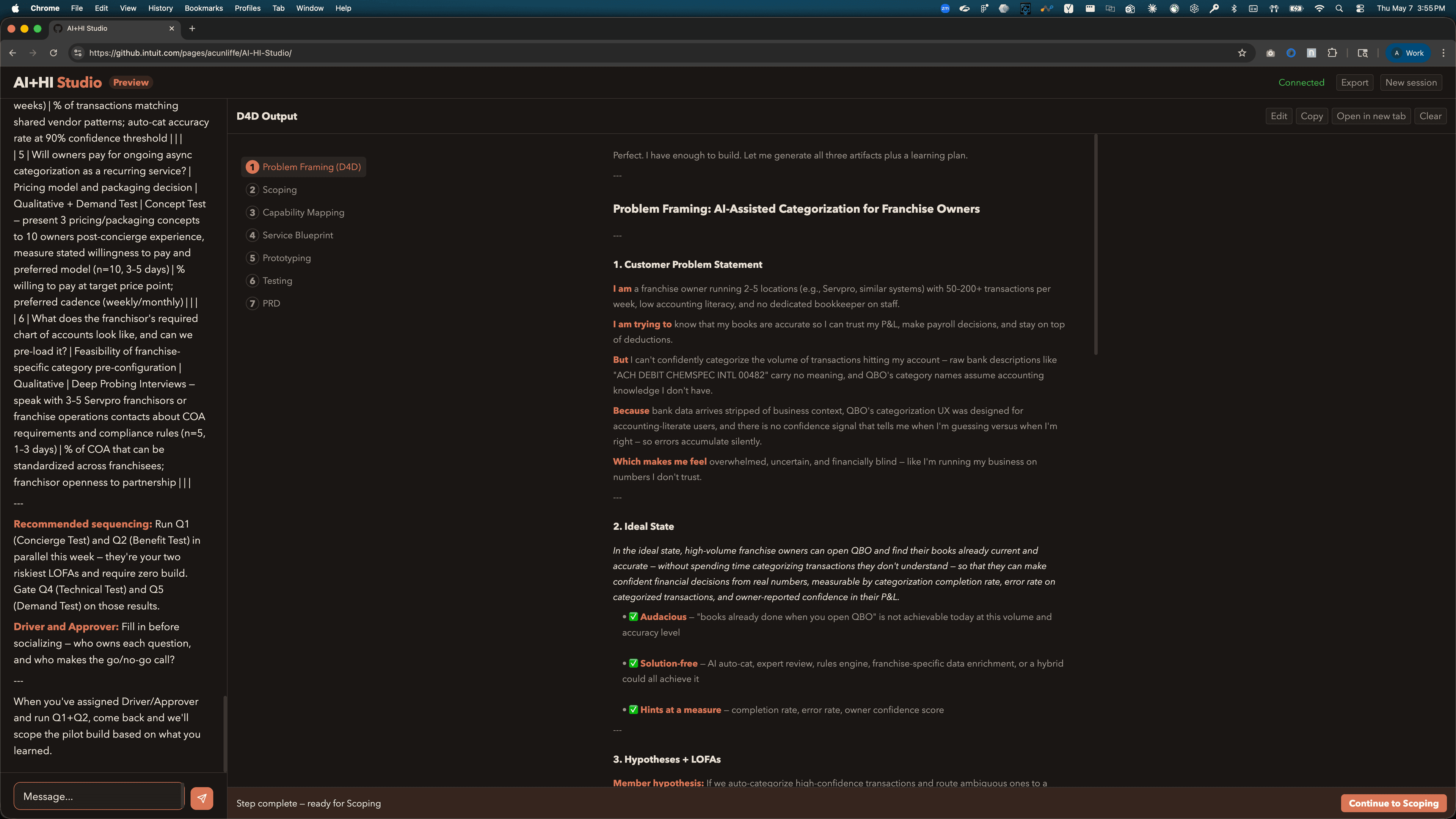
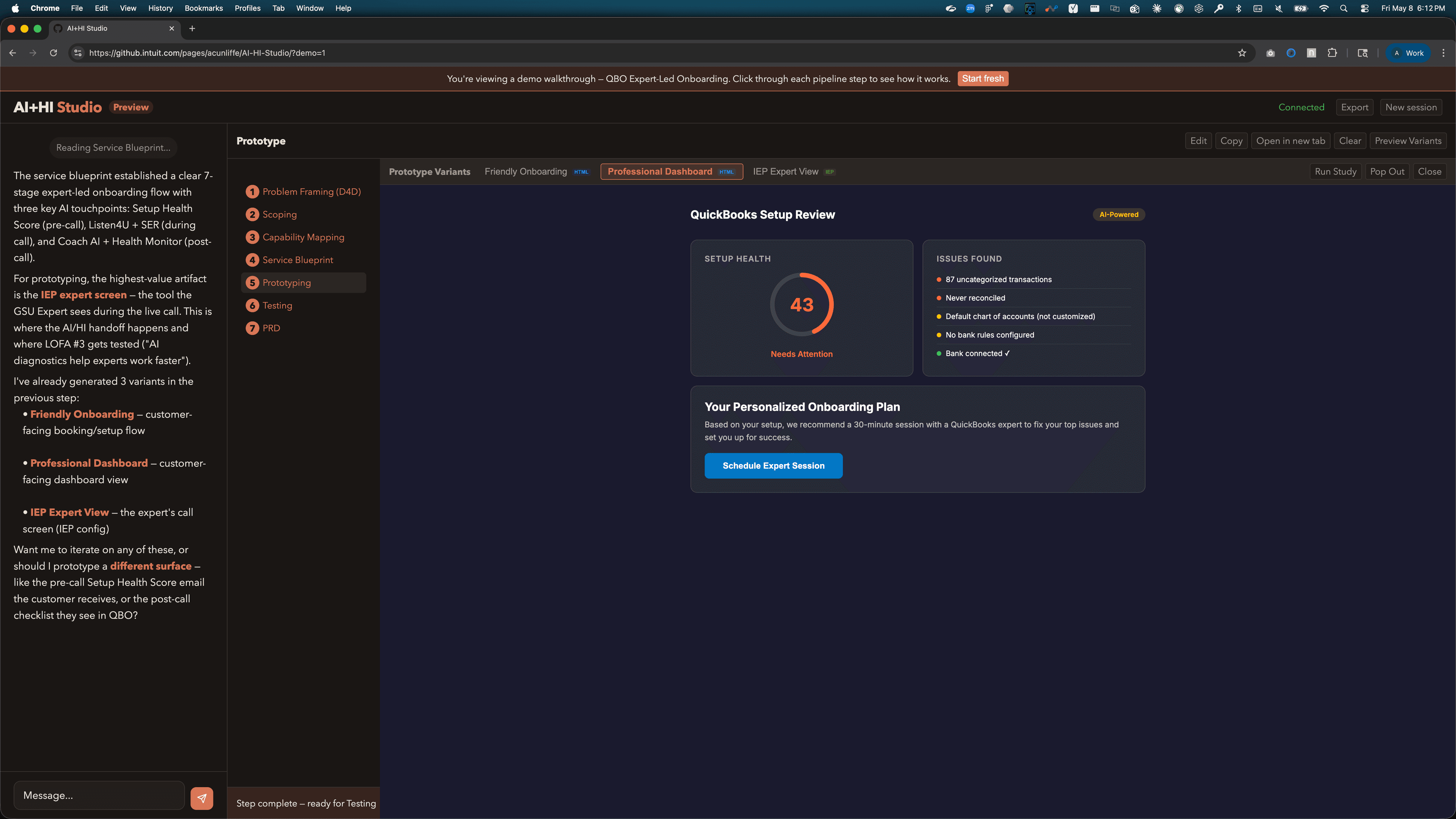
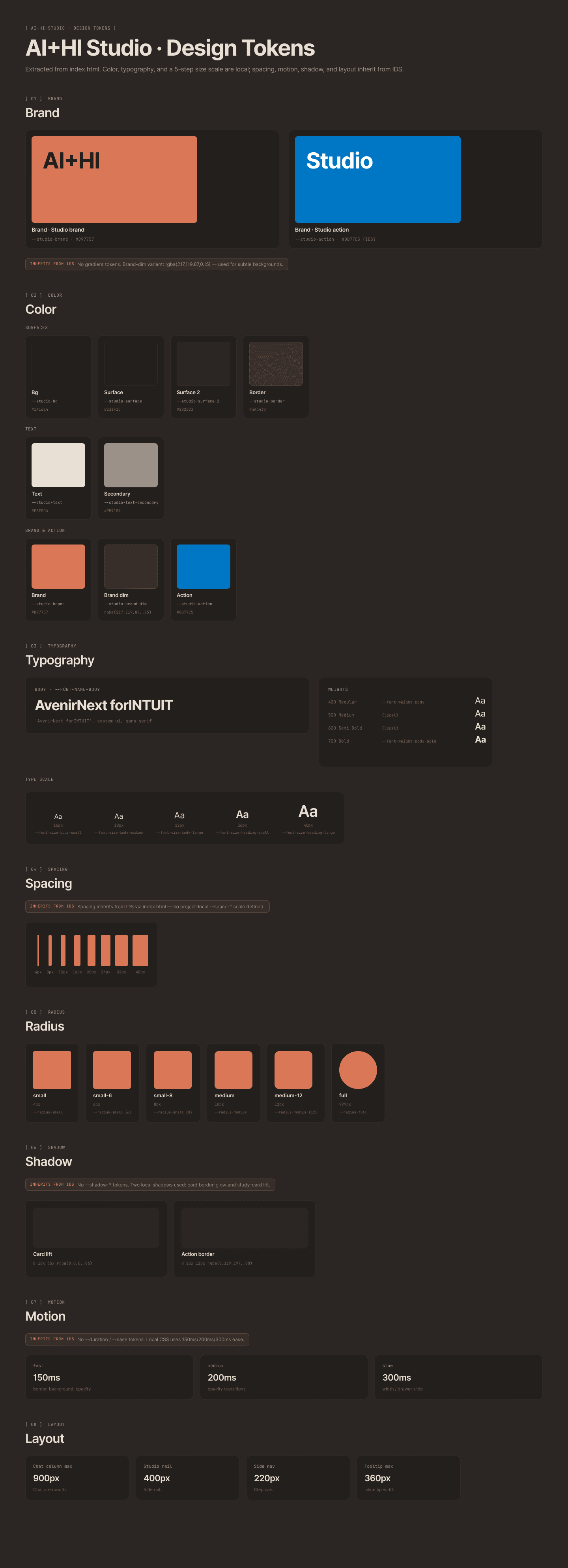
AI+HI Studio is the execution layer. Studio packages Intuit's Design for Delight framework — from pain framing through PRD synthesis — into a seven-step pipeline any designer, PM, or service architect can run independently. The knowledge base encodes voice-of-customer findings from eight research projects, expert archetypes, platform capabilities, and the full D4D framework. AI runs the pipeline; the team signs off on the PRD.
I trained and deployed both on Claude Sonnet 4.6 running on AWS Lambda via Intuit's GenOS — the infrastructure under the design work, built end-to-end. Training those instances on Intuit's business goals, technical capabilities, org structures, and the D4D methodology is what turns generic AI output into ideas and PRDs that are contextually relevant to the business and defensible inside it. The moat isn't the AI. It's the institutional knowledge underneath it.
Outcome.
Together Scout and Studio form a closed loop that compounds: intelligence in, prioritized innovations out, structured execution on demand. What used to require months of framework fluency now takes a seven-step conversation.
Design tokens.
What changed.
3×
Daily intelligence briefings, automated.
7
Step pipeline from problem to PRD.
30+
Impactful features shipped in under a month — without dropping a core workstream.
8
VoC research projects encoded as live inputs.
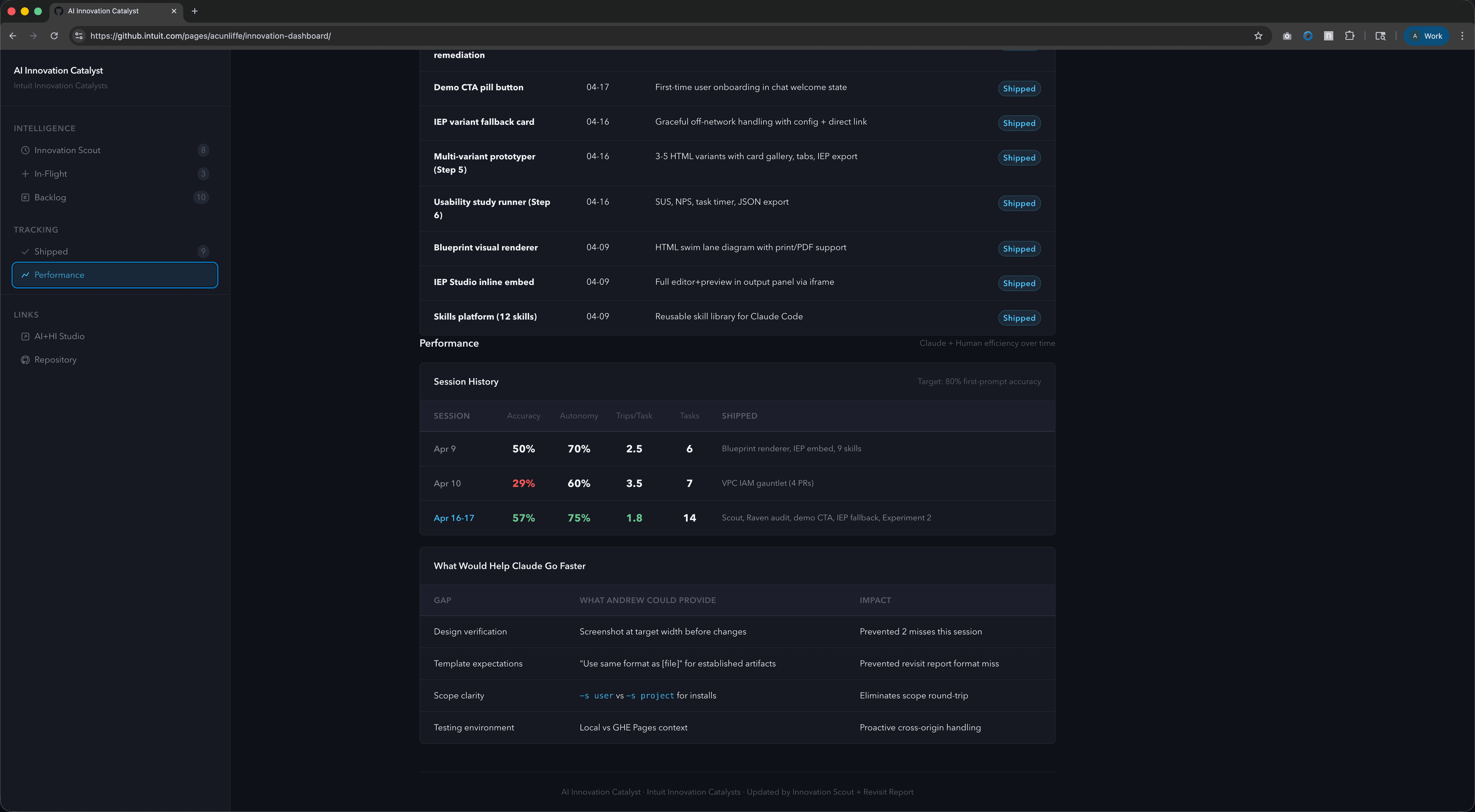
The hard part wasn't the model. It was deciding what counts as institutional knowledge and encoding it where any designer or PM can call it on demand. The AI is a thin layer on top of a deeper investment in capturing how the team already does its best work — and giving anyone access to it.
[Next case study]